Tuesday, May 3, 2016

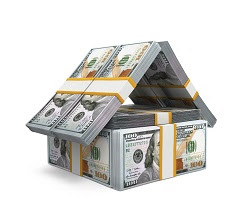
Your home may be worth a lot more than you think

Real estate lost a lot of value during the recession but most areas have rebounded considerably.  In some cases, the homes are worth more than they were before the housing bubble burst.
60178926_250.jpg
The dynamics are classic for this type of market: inventories are low, mortgage rates are low and demand is high.  All price ranges are on the rise with some at an even higher rate because the short supply is causing competition among buyers.
Another reason many homeowners' may have more equity is simply not staying current with what is going on in the market.  In a recent FNMA study, it indicates that 23% of owners believe they have negative equity in their home when actually, it is 9%.  37% believe they have greater than 20% equity in their home when actually 69% of homeowners do.
Even if you're not planning to sell your home, knowing the value helps you understand your financial position better.  Home equity debt up to a $100,000 limit is tax deductible and can be used for any purpose.  Owner's commonly refinance to eliminate mortgage insurance, consolidate mortgages, pay off higher interest rate debt like credit cards or student loans or to buy out an ex-spouse's equity.
Be aware that an automated value model like Zillow Zestimates uses algorithms to determine a price and while it might be in the ballpark, AVM results may only be accurate about 20% of the time.  A comparable marketing analysis or broker's price opinion will be more accurate due the subjective approach that will be used by an agent with personal experience in the area.  An agent will consider factors like condition, floorplan, marketability and demand.

Monday, April 25, 2016

Temporary Buy Down

There is an infrequently-used mortgage program available that could be the solution to a buyer's or seller's problem.
2-1 Buy Down - 2.png
A temporary buydown is fixed rate mortgage that the seller has prepaid interest at closing to lower the payments for a number of years.  The borrower must qualify at the note rate but gets the benefit of lower payments for the early years.
A 2/1 is a common buydown that the first year's payment is calculated at 2% lower than the note rate and the second year's payment is calculated at 1% lower than the note rate.  The third through thirtieth years' payments are the note rate.
Let's set the scene.  A buyer is using their available cash for down payment and closing costs to get into the home.  They'd like to put their own touches on the home when they move in but may not be able to for a year or two since most of their cash was used.
In this example, a $250,000 home is purchased with a 3.5% down payment and a 4% mortgage for 30-years.  Normally, the principal and interest payment would be $1,151.76 for the full 30-year term.  If the seller will pay the lender $4,736 at closing, it can be applied to pre-pay part of the interest for the first two years.
2-1 Buy Down - chart.png
The first year, the buyer's P&I payment will be $891.71 for 12 months based on a 2% interest rate or 2% lower than the 4% note rate.  It is $260.06 lower per month in the first year.  The second year, the buyer's P&I payment will be $1,017.12 for the next 12 months based on a 3% interest rate or 1% lower than the 4% note rate.  It is $134.64 lower per month in the second year.
A bonus for the buyer will be that the cost of the buydown paid at closing by the seller becomes prepaid interest that is deductible by the buyer in the year of purchase.  The buyer gets lower than normal payments for the first two years and a sizable tax deduction.
This type of program can be very beneficial to a seller who wants to offer terms to improve the marketability of their home rather than lower the price.  The challenge will be explaining it to not only potential buyers but even agents who are not familiar with this program.

Monday, April 18, 2016

Tips for Buying Rentals

Buying rental property can be an excellent decision and the better informed you are, the more likely you'll have favorable results.  The following suggestions can help you with your decisions.

rising homes.jpg
Real estate is a long term investment affected by supply, demand and the economy.  It isn't an investment that is easily converted to cash.  The costs to acquire and dispose of real estate are sizable and need to be spread over years to minimize their effects on the rate of return.

Invest in average price homes or slightly below average price to appeal to the broadest market not only when you are renting but later on when you sell it.  The average price is relative to the market you are in and those specific prices.
Lower-priced homes will rent for more relative to higher-priced homes.  There is an inverse relationship between rent as a percentage of the price.  As the price increases, the rent as a percentage of the price decreases.  For example, a $200,000 home might rent for $1,750 a month or 0.88% where a $400,000 home might only rent for $2,250 a month or 0.68%.
Choose predominantly owner-occupied neighborhoods because when you sell the home, it will appeal to a homeowner who will most likely pay a higher price for the home.  Homes in predominantly tenant-occupied neighborhoods tend to sell to investors who pay lower prices and will not be emotionally involved with the purchase.
Purchase a property with the idea of selling it in mind.  You may be able to get a property for a bargain price today but if it is due to a functional obsolescence like a bad floorplan or not enough bathrooms, that problem will still be there when you're ready to sell the property.  Identify what the problem is and what solutions are available.  The property may rent fine in that condition but before you sell, it will need to be corrected.
Get the home inspected before you purchase it.  Having the property checked out can save thousands in unanticipated expenses. 
Consider getting a home warranty on your rental.  The annual premium can limit the out of pocket expenses for repairs and maintenance.

Risk can be minimized by understanding the investment and what is involved in the acquisition, operation and disposition.  For the typical homeowner, rental property is something that they can relate to because of the similar attributes of the home they live in.

Tuesday, January 19, 2016

Remember to Get Your Annual Credit Report

You are probably aware that Federal law entitles you to a free copy of your credit report annually by each of the three credit bureaus: TransUnion, Experian, and Equifax. By regularly looking at each of these reports, you can determine if there are any errors on them and be aware of your credit worthiness.
Instead of ordering all three at the same time, experts recommend that you stagger them throughout the year. This will let you look at your credit at three different times during the year instead of only once a year.
32619499_s-300.jpg
An easy way make this happens on a timely basis is to set a recurring appointment on your digital calendar whether it is on your phone, your email program or a contact manager. Make the appointment to order a free credit report from www.AnnualCreditReport.com a recurring event to take place every four months. You’ll order one report from each of three companies once a year.
You can record that date and the bureau you ordered the last report in the appointment’s note section so that you’ll have a history and won’t try to order the same report twice in one year.
This isn’t just for people who are trying to clean-up their credit. This procedure allows you to monitor your credit to be sure that your report is accurate. You might even discover that someone is illegally using your good credit.
Recurring Appt.png

Monday, January 11, 2016

It's Your Advantage

Technology has certainly streamlined the home buying process and introduced things that help purchasers make better decisions. Buyers have enthusiastically embraced video tours, digital signatures and the enormous amount of information available about a home, neighborhood, schools and neighbors.
The ironic thing is that buyers are ignoring the one single thing that can help them secure the “right” home. Talking to a lender or using a financial calculator is not pre-approval.
pre-approved-300.jpg
Pre-approval requires written verification on employment and income and ordering a credit report for the purpose of obtaining a mortgage. A mortgage credit score is different than what a person might see from credit reporting websites. 
Pre-approval gives buyers the confidence to know the amount they can borrow which can result in bargaining power when dealing with a seller or competing against another offer. Transactions can close quicker once a buyer has been pre-approved.
If any issues are discovered in the initial process, the purchaser and lender will have more time to correct them compared to trying to get it done during the loan approval period as stated in the sales contract.
Most lenders' best interest rates are only available to the best borrowers. You might get approved on a loan but at a higher rate than you expected which could make a significant difference in the monthly payments.
The “right” home without financing will never have the buyer’s address. Getting pre-approved with a trusted mortgage professional is one of the first steps in the buying process. It can definitely be an advantage that will benefit you in negotiations and ultimately, during the time you own the home.

Monday, January 4, 2016


Early Burnout Could be Good

Most of us understand the expression "burning the candle at both ends" to mean working so hard that you burn yourself out. Normally, that wouldn’t be a good idea unless it is intentional.
If the candle is your mortgage and the strategy is to get it paid off early, being “burned out” would be a good thing. One end of the candle would be your regular mortgage payments and the other end would represent additional principal contributions.
candle-250.jpg
Since the Great Recession, lenders have been reporting a higher than normal number of borrowers getting shorter term mortgages not only when the purchase the home originally but when they refinance them also. It seems like the mindset of America’s homeowner has shifted a little from the belief that they will always have a house payment.
The extra $100, $200 or $500 in your checking account isn’t earning interest. Additional principal contributions with your regular payments on a fixed rate mortgage will save interest, build equity and shorten the term of the mortgage.
Wealth management is about making financially wise choices. If having your home paid for by retirement age is one of your goals, making extra contributions regularly could get you there. Use this Equity Accelerator to see how it will affect your loan.

Monday, December 21, 2015

Forced Savings

One of the big banks has a voluntary program available that transfers $100 each month from your checking account to your savings account. In five years, the account owner would have over $5,000 because of a type of forced savings. 
iStock_000059416596-250.jpg
Similarly, when a person buys a home with a standard amortizing loan, each month, a part of the payment is used to reduce the principal loan amount. Amazingly, over $4,000 would be applied toward the principal in the first year of a $250,000 mortgage at 4% for 30 years. In five years, the loan amount would be reduced by almost $25,000 through normal payments.
The other dynamic that is in play is that while the unpaid balance is being reduced, appreciation causes the value to increase. The difference between the two makes the equity grow even faster. Three percent appreciation on a $250,000 home would increase its value in five years by almost $40,000.
A 30-year mortgage of $250,000 will be paid for in 30 years. At an average of 3% appreciation, the asset would be worth about $600,000. If you continue to rent, the asset belongs to your landlord instead.
Many experts believe that the homeowner benefits from the forced savings of amortization and the leveraged growth that takes place in the investment. It has been observed in the tri-annual Consumer Finance Survey by the Federal Reserve Board that homeowners' net worth is considerably higher than that of renters.